Apple's Reframe: A Moment That Never Was
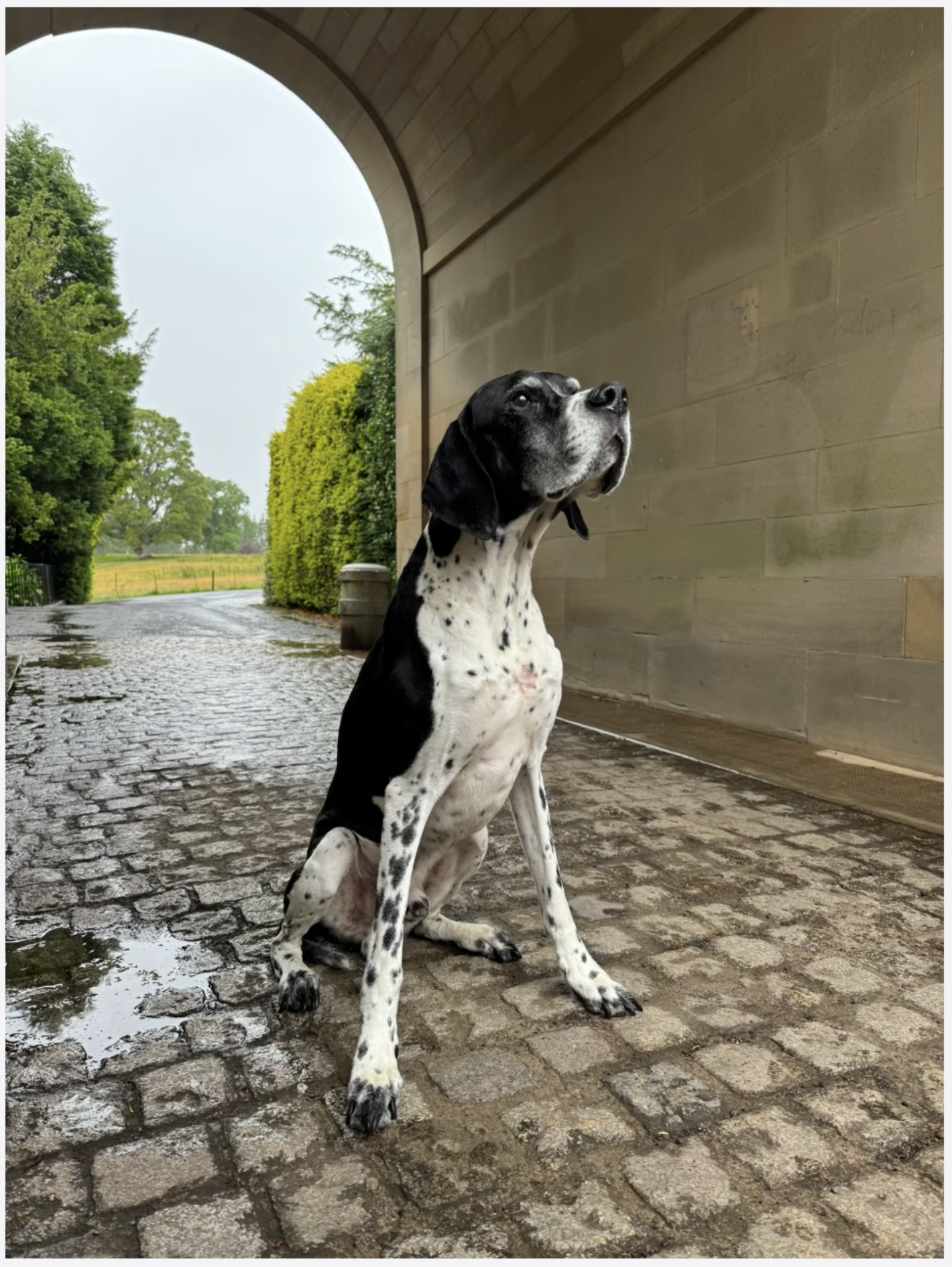
Yesterday’s WWDC ‘26 keynote brought the usual slew of product updates and AI features. Most of the online discourse in my bubble has fixated on Siri AI, but I want to focus on something quieter that Apple demoed for the Photos app: a feature it calls Spatial Reframing or Reframe for short. Linked YouTube video is timestamped. Here is a press release with demo shots.
It is a spatial editing feature that lets you change the angle of a photo you have already taken. If your subject was not looking directly at the lens, you can seemingly “correct” that after the fact. Say you have a photo of a dog under an arch and the framing is not quite symmetrical. You wish you had captured it from a slightly better angle. Now you can “fix” that in post.
Computational photography, as Apple started calling it a few years ago, was already drifting into territory that made me uneasy. This feels like a step too far.
To me, a photo is a moment in time, perfectly preserved. You can apply filters, crop it, enhance it, play with light and colour, do all kinds of artistry around it. But at its core it is still an authentic record of a real moment in space and time: you were there, you held a camera, you watched a scene unfold, and you pressed the shutter. You wished the subject had looked straight down the lens, but in that moment they did not. You wished they had not blinked, but they did. You wished you had framed it better or held the camera at a different angle, but you did not. Airbrushing your own photo library is a personal choice. This is something else: a deliberate hallucination, a machine-generated version of a moment that no human ever actually observed.
Apple is not the first to go here. Some smartphone makers in Asia have done versions of this for years, often at a real cost to colour accuracy, with the now-infamous “beauty filters” they turned on by default. A few years ago Google showed off a similar trick at a Pixel event: take several group photos in a row, and it would stitch together a single image with everyone smiling, eyes open, looking at the camera, all at once. I remember debating this with a friend at the time. I understand that it solves a “problem.” But it is not authentic. And in an age where we are constantly asking “Is this AI generated?”, authenticity matters more than ever.
You could argue that every photo I have ever looked at has already been processed. RAW sensor reading that I never see and it’s all machine interpretation on screen anyway. Where I’m drawing a line may feel somewhat arbitrary. But authenticity was Apple’s stance back in 2024. In an interview with WSJ Craig Federighi went on record and it resonated deeply with me at the time.
Yeah, I would say, even the ability to remove that water bottle is one that there were a lot of debates about. Internally, do we want to make it easy to remove that water bottle or that mic because that water bottle was there–when you took the photo? The demand for people wanting to clean up what seem like extraneous details to the photo that don’t fundamentally change the meaning of what happened has been very, very high. So, you know, we were willing to take that small step, but we are concerned that there’s a great history to photography and how people view photographic content as something they can rely on as indicative of reality. Our products, our phones, are used a lot, and it’s important to us that we help purvey accurate information, not fantasy.
Philosophical debate aside, let’s consider from a more grounded perspective in this day and age.
People take photographs in some of the more contentious moments of life: at protests, at a tense street scene, in the middle of something going wrong. A few years ago I did jury service, and at one point we were shown a grainy phone image that appeared to show the defendant holding an object. It could have been a pen. It could have been a small knife. It was genuinely impossible to tell. As “enhance” creeps closer and closer to “invent,” how far are we from someone being convicted on the strength of a hallucination in a photo? I would like to believe our judicial system is better than that, and that manipulated or “enhanced” images can be picked apart with basic forensic tools. But the court of public opinion worries me far more. Could you reframe a photo taken at two opposing protests to place someone on a side they never stood on? Screenshot it (to dodge forensics), post it, and let it fuel an argument in bad faith?
I would like to think that people far smarter than me thought long and hard about safety when they designed this. I am yet to find any concrete technical details. I have been through the Platform State of the Union and other uploaded videos from WWDC, and found nothing further on Reframe. The press release has a quote that does a lot of heavy lifting.
Using powerful image models, Spatial Reframing will only generate new content where the perspective has been shifted, ensuring the reframed photo stays consistent with the original scene.
It would be nice to understand how exactly Apple will make sure that it doesn’t hallucinate and generate random details, given their strong privacy focus and previous stance. This veers into “Mixed reality” and it is not real. You can argue about what “real” even means, and that is a whole other philosophical rabbit hole. I am coming at this from a simpler, human point of view: we move through space and time, we observe the world around us, and we build a sense of it through our own perception. Our reflections in mirrors. The photos we take. Is it okay for machines to start reshaping our own images of ourselves? The more nefarious and perverse use cases for Reframe are left as an exercise for the reader.